Skip to content
Kitchen demolition cost is one of the most searched renovation questions, and rightfully so. It is the first real expense you face before a remodel, and it can swing wildly depending on kitchen size, what materials need to come out, and whether hazardous materials are involved. The national average sits around $2,600 for a full professional demo, but homeowners in the Rio Grande Valley often see quotes that range from $800 to $5,000 depending on scope.
At RGV Waste, we work alongside homeowners and contractors across the Valley every week. We handle dumpster rentals for demolition projects of every size, so we see firsthand what drives these costs up or keeps them manageable. Here is what the numbers actually look like.
Average Kitchen Demolition Cost by Scope
The biggest driver of demolition kitchen cost is scope: are you doing a light cabinet swap, a full gut job, or something structural? The table below covers the most common project types.
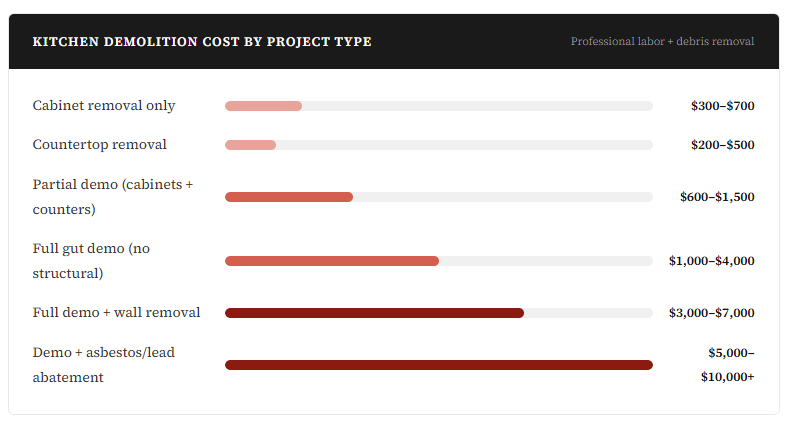
Image Link: https://prnt.sc/T7aXFKwylGWK
RGV Tip: In the Rio Grande Valley, full gut demolition on a standard 150–200 sq ft kitchen typically runs $900–$2,800 including labor. Adding a dumpster rental from RGV Waste for debris removal adds $300–$500 depending on duration and tonnage, which is often still cheaper than hauling fees bundled into a contractor’s quote.
Cost of Kitchen Demolition Per Square Foot
Most contractors price kitchen demolition between $12 and $50 per square foot. The spread is wide because it depends on material type, accessibility, and what gets disconnected (plumbing, gas, electrical). Below is a typical breakdown.
| Kitchen Size | Sq Footage | Low Estimate | High Estimate |
| Small | 80–120 sq ft | $960 | $6,000 |
| Medium | 120–200 sq ft | $1,440 | $10,000 |
| Large | 200–300 sq ft | $2,400 | $15,000 |
| Open-concept (300+ sq ft) | 300+ sq ft | $3,600 | $20,000+ |
These ranges feel dramatic, but they make sense once you factor in whether you are paying for a two-person crew for half a day or a specialized team dealing with tile, load-bearing walls, and asbestos. A kitchen demolition cost estimator from a local contractor will narrow this down once they see your space.
Kitchen Cabinet Demolition Cost
Cabinet removal is frequently the first thing homeowners tackle themselves, but it is not always straightforward. Upper cabinets need two people, and lower cabinets attached to plumbing require care. Kitchen cabinet demolition cost runs separately from full gut quotes in many cases.
| Cabinet Type | Average Cost | Notes |
| Upper cabinet removal (per linear ft) | $25–$45 | Requires patching drywall anchor points |
| Lower cabinet removal (per linear ft) | $30–$60 | Higher if plumbing disconnect needed |
| Full set removal (small kitchen) | $300–$500 | Cabinets only, no counters |
| Full set removal (large kitchen) | $500–$1,200 | Labor + disposal fees |
| Cabinet + countertop combo | $600–$1,800 | Most common partial demo scope |
If you are reusing your existing cabinets or donating them, removal costs can drop since contractors do not need to demo them aggressively. Habitat for Humanity ReStores across South Texas accept usable cabinets, which can reduce your disposal costs too.
What Drives Kitchen Demolition Cost Up
Several key factors can significantly increase the cost of a kitchen demolition project beyond base pricing. Understanding these variables helps you plan a more accurate budget and avoid unexpected expenses.
1. Hazardous Materials
Homes built before 1980 in the Rio Grande Valley commonly have asbestos in floor tile adhesive, ceiling texture, and pipe insulation. Older homes may also have lead-based paint on cabinets or walls. Both require certified abatement before any demo begins, and this adds $1,500–$5,000 to the project depending on extent.
2. Load-Bearing Walls
Open-concept renovations that remove walls require a structural engineer’s assessment, temporary shoring, and a beam installation. This work alone can add $3,000–$10,000 on top of standard demo costs.
3. Plumbing and Gas Disconnection
A licensed plumber must cap gas lines and disconnect water supply before any demo crew starts. Plumbing disconnection typically runs $150–$400. Gas line capping runs $200–$500. These are non-negotiable for safety and code compliance.
4. Accessibility and Debris Removal
If your kitchen is on an upper floor, down a narrow hallway, or in a space where a dumpster cannot park close, labor costs rise. Debris removal is a real cost that many contractor quotes obscure. A dumpster rental from RGV Waste placed right at your door eliminates hauling trips and keeps your crew working instead of driving to a landfill.
5. Tile and Flooring Type
Ceramic tile glued to a concrete substrate is one of the most labor-intensive materials to remove. It takes longer and dulls tools faster. Expect to add $1–$3 per square foot for heavy tile removal compared to vinyl or laminate.
Kitchen Demolition Cost Estimator: A Step-by-Step Approach
A proper kitchen demolition cost estimator works through these variables in order. Use this as a checklist before calling any contractor.
1. Measure your kitchen:
Length × width in square feet. This is the baseline for every per-square-foot estimate.
Cost: Free
2. Identify hazardous materials
Test for asbestos and lead in homes built before 1980. Test kits typically cost $15–$35 at hardware stores.
Cost: $15–$400
3. Schedule utility disconnections
A licensed plumber and electrician must shut off and cap utilities before demolition begins.
Cost: $200–$900
4. Get at least 3 contractor quotes
Ask each contractor for a detailed breakdown including labor, hauling, disposal, and permits.
Cost: Free
5. Reserve a dumpster
Book early, especially during peak spring and summer remodeling season.
Cost: $300–$500
6. Pull required permits
Structural demolition and utility work typically require permits in most municipalities.
Cost: $100–$500
DIY vs. Hiring a Pro: Real Cost Comparison
Many homeowners consider DIY to cut kitchen demolition cost. It can work for surface-level work like cabinets and drywall, but becomes risky near utilities, load-bearing walls, or hazardous materials. Here is an honest comparison.
| Factor | DIY Demo | Professional Demo |
| Cost | $150–$900 (tools, disposal, rental) | $800–$10,000 depending on scope |
| Good for | Cabinet removal, countertop removal, non-structural walls | Full gut jobs, structural work, hazmat situations |
| Savings potential | $500–$2,000 on labor | N/A |
| Risk | Hidden plumbing, wiring damage, disposal fines | Lower risk due to experience and insurance |
| Requires | Time, physical ability, research | Minimal homeowner involvement |
| Includes | Tools and self-managed process | Liability insurance, code knowledge, faster work |
| Permit compliance | Homeowner responsibility | Contractor handles or advises |
| Timeline | Varies widely | 1–3 days for most full demos |
| Dumpster needed | Yes | Often separate (confirm with contractor) |
Hybrid approach: A common money-saving strategy in the Valley is to do cabinet and countertop removal yourself over a weekend, then hire a crew for the tile, drywall, and structural work. This can cut your professional labor bill by 25–40%.
Demo Quote: What’s Included vs Not Included
A standard demolition quote usually covers basic teardown and cleanup, but many safety, utility, and specialty services are billed separately. Always confirm scope details before hiring.
What Is Included in a Standard Demo Quote
- Labor for physical demolition of cabinets, counters, appliances (if requested)
- Drywall removal (sometimes; confirm this)
- Flooring removal (sometimes; often quoted separately)
- Basic debris loading into a bin or truck
- Protection of adjacent rooms during work
What Is Usually NOT Included
- Asbestos or lead abatement (always a separate licensed contractor)
- Structural engineering or load-bearing wall permits
- Plumbing and electrical disconnection
- Appliance removal or haul-away (often an add-on fee)
- Dumpster rental if you arrange it separately (which usually saves money)
Frequently Asked Questions
How much does kitchen demolition cost for a small kitchen?
A small kitchen under 120 square feet typically costs $800–$2,000 for full professional demolition. If you handle cabinet removal yourself and hire a crew only for tile and drywall, you can often bring this below $1,200. Add $300–$400 for a dumpster rental from a local provider like RGV Waste.
Can I use a kitchen demolition cost estimator online?
Online estimators give a rough ballpark, typically $12–$50 per square foot. They are useful for budgeting conversations but not reliable enough to plan a project. Local factors like Rio Grande Valley labor rates, hazardous material age, and permit costs vary enough that you need at least two in-person quotes before committing.
How long does a kitchen demolition take?
A full gut demo on a standard kitchen takes 1–2 days for a professional crew of 2–3 workers. DIY projects typically stretch to a full weekend. Asbestos abatement adds 1–3 additional days before the demo can begin. Structural wall removal adds another day for engineering inspection and permits.
Do I need a permit for kitchen demolition in Texas?
In most Texas cities and municipalities, including those in the Rio Grande Valley, a permit is required if you are removing load-bearing walls, altering electrical or plumbing, or performing structural changes. Cosmetic demos like cabinet and countertop removal typically do not require a permit, but always verify with your local building department before starting.
What happens to the debris from kitchen demolition?
Debris must be hauled to a licensed disposal facility. Contractors either include haul-away in their quote or leave it to you. Renting a dumpster directly from a local provider like RGV Waste is often the most cost-effective option. You fill it at your own pace and we handle the haul. Most kitchen gut jobs produce 1–3 tons of debris, which fits a 10 or 15-yard dumpster.
Final Takeaway
Kitchen demolition cost ranges from a few hundred dollars for basic cabinet removal to over $10,000 when structural work and hazardous materials are involved. The most common full-gut project in the Rio Grande Valley runs $1,500–$4,000 including labor, permits, and debris removal.
Do not let vague quotes catch you off guard. Get line-item estimates, test for hazardous materials early, and separate your debris removal from your contractor’s bill. When you rent a dumpster independently through RGV Waste, you almost always pay less than the hauling markup built into a contractor’s package price.
Plan carefully, get three quotes, and make sure your demo crew is licensed and insured. A clean demolition is the foundation of a kitchen remodel done right.